- Runtime
- 59:08
- Export
- 1920 × 1080 at 60 fps
- Hardware
- RTX 4070 · Ryzen 9 5950X · 64 GB RAM
The render workflow
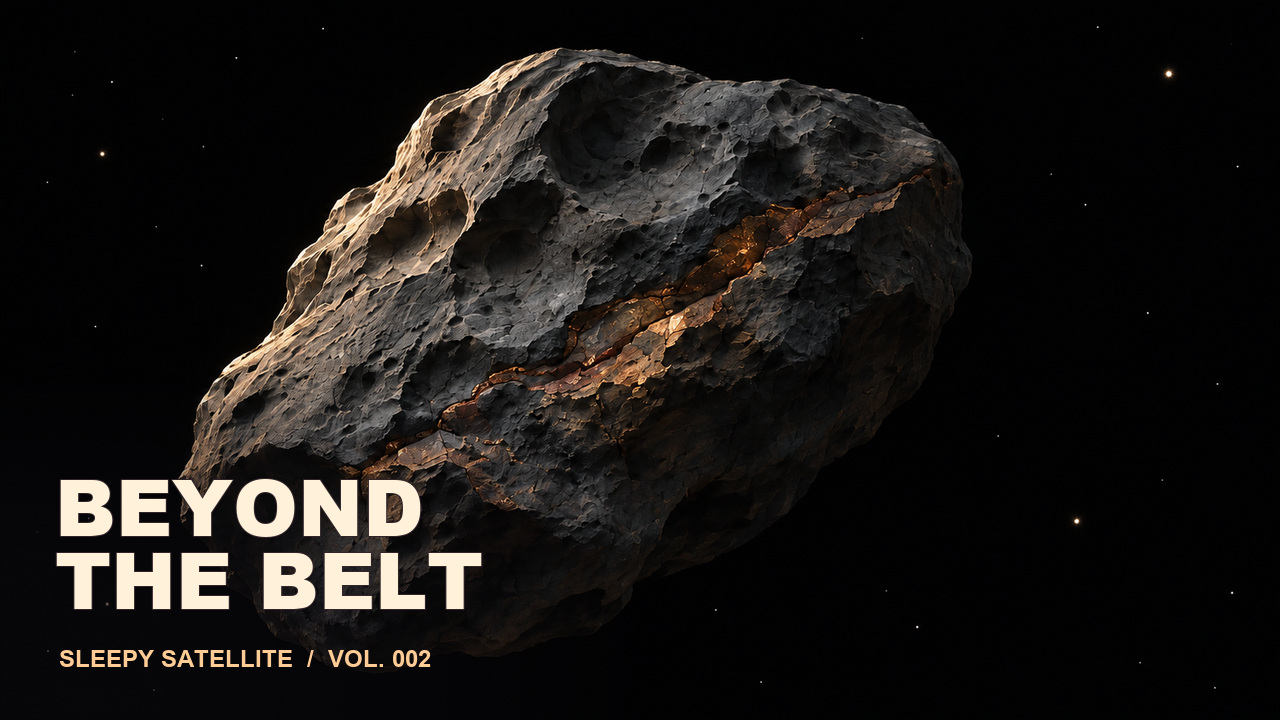
- Lock the mix and mark the track starts. Use those timestamps as visual cues. At 5:55, a brief camera jolt takes the view from a broad asteroid field to a single copper-streaked rock as the second track comes in.
- Animate each illustration separately. Python and OpenCV build the frames. For the asteroid, rotate an isolated cutout and move glints across the copper seams. Let dust drift and stars twinkle on their own timing so the frame has depth.
- Render scenes in chunks. Give each chunk a fingerprint tied to its inputs and settings. On a rerun, reuse matching chunks so an animation revision can stay local to the affected scene.
- Encode and finish with FFmpeg. This render used H.264 via NVIDIA NVENC. The script can use libx264 as a fallback. At the finish, mux the approved AAC mix into the MP4 using audio stream copy.
- Check the actual upload file. Use FFprobe for frame size, rate, and stream duration. Run a full decode check for errors, then spot-check visual cuts against the audio cues.
What the RTX 4070 handled
NVENC encoded the finished frames to H.264. Python still had to build those frames, so the GPU encoder is only one part of render time. The final video was about 1.23 GB and ran to 212,858 frames.
See the first transition
Open the transition on YouTube